
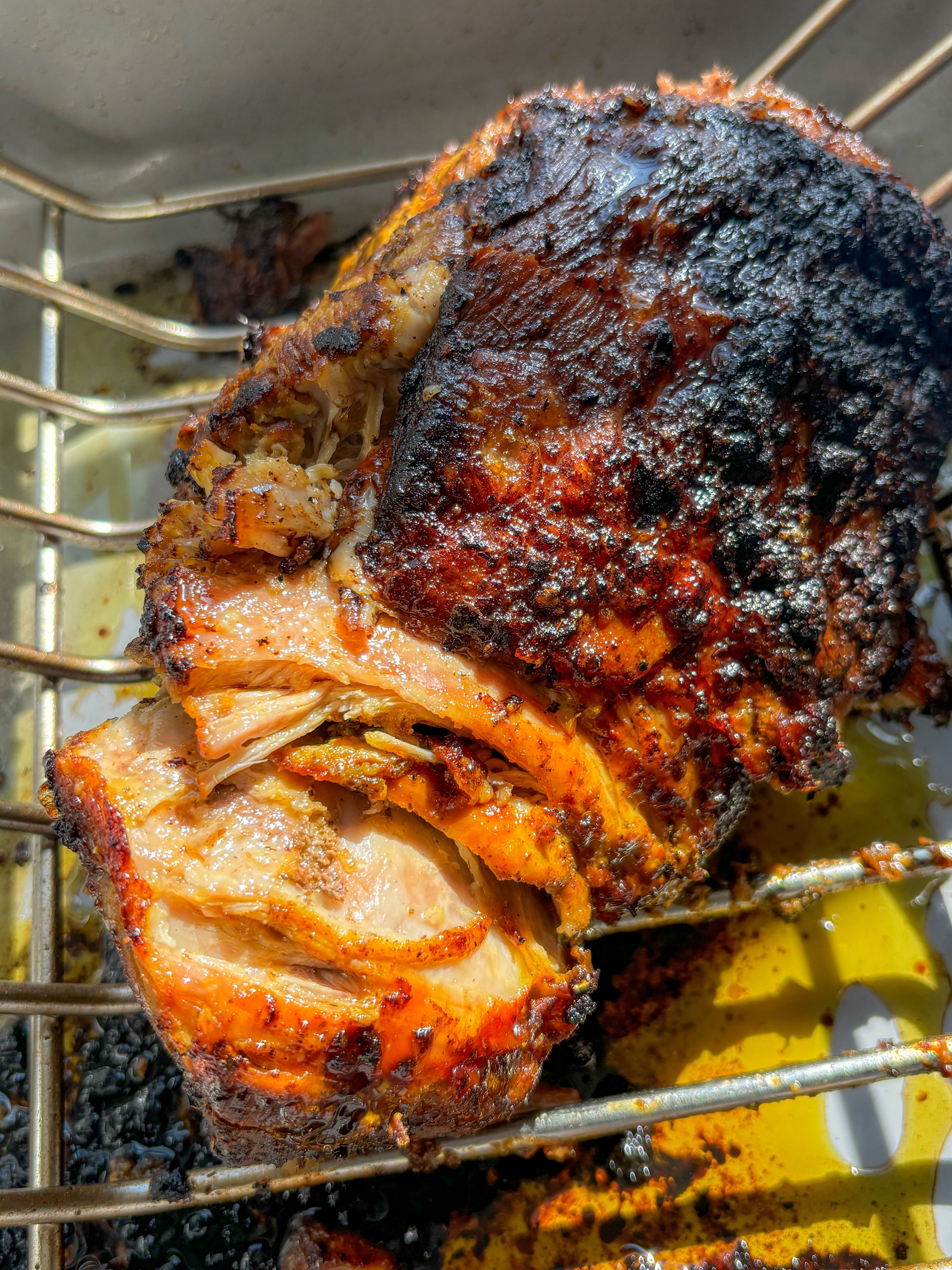
This Dominican pernil recipe features juicy, tender pork shoulder marinated with garlic, sofrito, oregano, and traditional seasonings, slow-roasted with delicious crispy skin.
If there’s one dish that brings everyone together around the table during the holidays, it’s a good pernil! This traditional Dominican roasted pork is one of those meals that makes the entire house smell incredible. Marinated with garlic, sofrito, oregano, adobo, sazón, and fresh lime juice, then slow-roasted until tender and juicy, this pernil recipe is full of the bold flavors that make Dominican cooking so special.
Growing up in a traditional Dominican household, dishes like pernil were always something special, especially during family gatherings and celebrations. It’s a meal that takes a little patience, but the result is absolutely worth it. The pork becomes incredibly tender, the seasonings soak into every bite, and the best part is the golden, crispy pork skin, also known as cuerito.
Whether you’re preparing Christmas dinner, hosting a family gathering, or simply craving homemade Dominican food, this Dominican pernil recipe is one you’ll want to keep in your recipe collection. Serve it with moro de guandules, white rice, tostones, and avocado for a delicious meal everyone will enjoy.

Why You Will Love This Dominican Pernil Recipe
There are so many reasons to make this pernil recipe, but here are a few of my favorites:
- Packed with flavor: The combination of garlic, sofrito, oregano, adobo, sazón, and lime creates a flavorful marinade that seasons the pork beautifully.
- Tender and juicy: Slow-roasting allows the pork shoulder to become tender enough to shred with a fork.
- Crispy pork skin: When prepared properly, the outside develops a delicious golden crust while the inside stays juicy.
- Perfect for gatherings: This recipe is wonderful for Christmas, Thanksgiving, birthdays, Sunday dinners, and family celebrations.
- Great for leftovers: Leftover pernil is delicious in sandwiches, tacos, rice bowls, and wraps.
- Easy to prepare ahead: Season the pork the night before and let it marinate in the refrigerator until you’re ready to roast.
What Is Dominican Pernil?
Pernil is a traditional Latin American roasted pork dish, particularly popular in Dominican and Puerto Rican cuisine. It’s typically prepared using a pork shoulder or pork butt that’s generously seasoned with garlic, oregano, sofrito, and other flavorful ingredients before being slow-roasted until tender.
In Dominican households, pernil is especially popular during the Christmas season, although it’s enjoyed throughout the year for family gatherings and special occasions.
One of the most recognizable parts of a traditional pernil is the crispy pork skin, known as cuerito. The contrast between the crunchy exterior and the juicy, tender pork underneath is what makes this dish so delicious.
Every family has its own way of seasoning pernil, and the ingredients can vary depending on personal preference and family traditions. My version uses a combination of sofrito, fresh garlic, oregano, adobo, sazón, lime juice, and a few additional seasonings to create a flavorful marinade.

Dominican Pernil Recipe Ingredients
You don’t need anything complicated to make a delicious homemade pernil. Most of these ingredients are pantry staples commonly used in Dominican cooking.
- Pork shoulder: You’ll need a 4.5–5 pound bone-in pork shoulder or pork butt. These cuts are ideal for slow roasting because they contain enough fat and connective tissue to create tender, juicy meat.
- Avocado oil: Helps bind the seasonings together and coat the pork.
- Sofrito: A staple in Dominican cooking that adds a delicious aromatic base to the marinade.
- Minced garlic: Fresh garlic adds the bold, savory flavor that makes this pernil so delicious.
- Dried oregano: A traditional seasoning used in many Dominican dishes.
- Adobo seasoning: Adds a savory blend of seasonings that complements the pork.
- Salt and black pepper: Help enhance the flavor of the other ingredients.
- Fresh lime juice: Adds brightness and balances the richness of the pork.
- Sazón: Gives the marinade additional flavor and a beautiful color.
- Fresh cilantro: Adds freshness and aroma to the marinade.
- Chicken broth: Helps keep the meat moist during the slow-roasting process.
- Smoked paprika: Adds a subtle smoky flavor and extra depth.
- Apple cider vinegar: Adds acidity to the marinade and complements the other seasonings.

How to Make Dominican Pernil:
The key to making a delicious pernil recipe is giving the pork enough time to marinate and allowing it to roast slowly. Here’s how to make it.
- Step 1: Prepare the marinade: In a small mixing bowl, combine the avocado oil, sofrito, minced garlic, dried oregano, adobo, salt, black pepper, sazón, fresh lime juice, chopped cilantro, smoked paprika, and apple cider vinegar. Mix everything together until well combined. The marinade should be thick enough to coat the pork.
- Step 2: Prepare and season the pork: Pat the pork shoulder dry with paper towels. Using a sharp knife, make small slits throughout the meat, especially around the thicker sections. This helps the marinade penetrate the pork and distribute the flavors throughout. Rub the marinade generously over the entire pork shoulder, working it into the slits. If your pork shoulder has skin, carefully loosen the skin where possible and season the meat underneath. Try to keep the outside of the skin as dry as possible if you want crispy cuerito. Cover the pork tightly with plastic wrap or place it in a covered container. Refrigerate overnight, preferably 12–24 hours.
- Step 3: Roast the pernil: When you’re ready to cook, preheat your oven to 400°F. Remove the pork from the refrigerator while the oven preheats. Place it in a large roasting pan or Dutch oven, skin side facing up.Roast uncovered at 400°F for approximately 1 hour to begin browning the exterior.After the first hour, reduce the oven temperature to 300°F. Pour the chicken broth into the bottom of the roasting pan, being careful not to pour it directly over the pork skin.Cover the pan loosely with aluminum foil and continue roasting for approximately 3–4 hours, basting occasionally with the pan juices. The pork should reach approximately 195–205°F internally for a tender, shreddable texture. Cooking time will vary depending on the size and shape of your pork shoulder.
- Step 4: Crisp the pork skin: Once the pork is tender, remove the foil and allow it to roast uncovered for approximately 30 minutes. If you want extra crispy pork skin, you can finish it under the broiler for a few minutes. Keep a close eye on it because the skin can brown very quickly.
- Step 5: Rest and serve: Remove the pernil from the oven and let it rest for at least 20 minutes before slicing or shredding. Once rested, shred or slice the pork and spoon some of those delicious pan juices over the meat. Serve with your favorite Dominican side dishes and enjoy!
Tips for Making the Best Pernil
A few simple tips can make a big difference when preparing this pernil recipe.
Marinate the pork overnight. Don’t rush this step! Allowing the pork to marinate for 12–24 hours gives the seasonings time to penetrate the meat and develop a deeper flavor.
Use bone-in pork shoulder. Bone-in pork shoulder or pork butt is my preferred choice because the fat and connective tissue help keep the meat tender during slow roasting.
Keep the skin dry. If crispy pork skin is your goal, avoid covering the outside of the skin with too much wet marinade. You can also refrigerate the uncovered, seasoned pork for a few hours before roasting to help dry the surface.
Don’t rush the cooking process. Pernil is best when cooked low and slow. Give the pork enough time to become fork-tender rather than relying only on the clock.
Use a meat thermometer. Pork shoulder can vary in size and shape, so checking the internal temperature is the best way to know when it’s ready. For shreddable meat, aim for approximately 195–205°F.
Let the pork rest. Resting the meat before shredding helps retain its juices and makes serving easier.
Save the pan juices. Don’t throw away those flavorful juices! Spoon some over the shredded pork before serving to add even more flavor.
What to Serve With Dominican Pernil
One of my favorite things about making pernil is pairing it with traditional Dominican side dishes. The pork is flavorful enough to stand on its own, but a few classic sides turn it into a complete meal.
Here are some of my favorite pairings:
- Moro de guandules: Rice cooked with pigeon peas and seasonings. This is one of my favorite sides to serve with pernil.
- Arroz blanco: Fluffy Dominican white rice is perfect for soaking up the delicious pan juices.
- Tostones: Crispy twice-fried green plantains add the perfect crunch.
- Yuca con mojo: Tender cassava served with a flavorful garlic and citrus sauce.
- Avocado salad: Fresh avocado with lime juice and salt is a simple, refreshing addition.
- Pasteles en hoja: A traditional Dominican holiday dish made with a seasoned plantain and root vegetable mixture.
For a complete Dominican holiday dinner, serve this pernil with moro de guandules, tostones, and avocado salad. It’s a combination that always feels like home!
Why Pernil Is a Holiday Favorite
In many Dominican households, pernil is more than just a roasted pork dish. It’s part of the traditions and memories that bring families together.
During the Christmas season, you’ll often find pernil served as the centerpiece of the holiday dinner table. The aroma of garlic, oregano, and seasoned pork roasting in the oven is enough to make everyone excited for dinner.
It’s also a wonderful option when feeding a crowd. A 4.5–5 pound pork shoulder can serve approximately 8–10 people, depending on portion sizes and the number of side dishes.
Another reason I love making pernil is that so much of the preparation can be done ahead of time. Season the pork the night before, refrigerate it, and roast it the following day.
And let’s not forget the leftovers! The pork is just as delicious the next day and can be used in sandwiches, tacos, rice bowls, or served with a fresh batch of tostones.
How to Store Leftover Pernil
If you have leftover pernil, don’t worry! It stores beautifully and makes delicious meals throughout the week.
Refrigerator: Allow the pork to cool slightly and transfer it to an airtight container with some of its pan juices. Refrigerate within 2 hours of cooking and enjoy within 3–4 days.
Freezer: Shred or slice the leftover pork and place it in a freezer-safe container or bag. Add a little of the cooking liquid to help maintain moisture. Freeze for approximately 2–3 months for the best quality.
Reheating: Reheat the pork in a covered baking dish with a splash of broth or reserved pan juices at 325°F until heated through. You can also reheat smaller portions in a skillet over medium-low heat.
If you want to bring back some of that crispy texture, finish the pork under the broiler briefly before serving.

Frequently Asked Questions
What cut of pork is best for a pernil recipe?
Bone-in pork shoulder or pork butt is best for this pernil recipe. These cuts have enough fat and connective tissue to become tender and juicy during slow roasting. I recommend using a 4.5–5 pound bone-in pork shoulder.
How long should I marinate pernil?
I recommend marinating your pork for at least 12 hours, preferably overnight. You can marinate it for up to 24 hours to give the seasonings more time to develop flavor.
What temperature should pernil be cooked to?
For tender, shreddable pork, aim for an internal temperature of approximately 195–205°F. Although pork is considered safe at a lower temperature of 145°F with a three-minute rest, pork shoulder needs additional cooking time for its connective tissue to break down and become tender.
How do I get crispy pork skin on pernil?
The secret to crispy pork skin, also known as cuerito, is keeping the skin as dry as possible. Avoid pouring the marinade or cooking liquid over the skin. Roast uncovered during the final stage of cooking and use the broiler briefly if needed.
Why is my pernil tough?
If your pernil is tough, it likely needs additional cooking time. Pork shoulder contains connective tissue that takes time to break down. Continue roasting until the meat is fork-tender and easy to shred.
Can I make this pernil recipe ahead of time?
Absolutely! You can prepare the marinade and season the pork up to 24 hours before roasting. You can also roast the pork a day ahead, refrigerate it promptly, and reheat it before serving. For the best crispy skin, finish crisping it just before serving.
Can I use boneless pork shoulder?
Yes! Boneless pork shoulder or pork butt can also be used. Cooking time may vary depending on the weight and shape of the meat, so always check the internal temperature and tenderness.
Can I make pernil in a slow cooker?
Yes, you can cook pork shoulder in a slow cooker until tender. However, you won’t get the same roasted exterior or crispy skin. If you choose this method, transfer the cooked pork to a roasting pan and finish it under the broiler to brown the outside.
How long does leftover pernil last?
Leftover pernil can be stored in an airtight container in the refrigerator for 3–4 days. Keep some of the cooking juices with the pork to help prevent it from drying out.
Can I freeze leftover pernil?
Yes! Pernil freezes very well. Shred or slice the pork, add some of the pan juices, and store it in a freezer-safe container for approximately 2–3 months for the best quality.
What is the difference between Dominican and Puerto Rican pernil?
Both dishes feature seasoned pork shoulder that’s slow-roasted until tender, often with crispy skin. However, the seasonings and preparation methods can vary between Dominican and Puerto Rican households. Each family has its own traditional way of preparing pernil.
Final Thoughts
This pernil recipe is one of those dishes that reminds me why I love homemade cooking so much. It’s full of traditional Dominican flavors, brings everyone together, and makes any family gathering feel a little more special.
Whether you’re making it for Christmas dinner or simply want to enjoy a delicious homemade Dominican meal, I hope this recipe becomes a favorite in your home, too. Don’t forget to save some leftovers because there are so many delicious ways to enjoy them!


Dominican Pernil (Dominican Roasted Pork)
Ingredients
- 1 4.5-5 lb bone-in pork shoulder, butt, or leg
- 2 Tbsp avocado oil
- 3 Tbsp sofrito
- 1 Tbsp minced garlic
- 1 ½ Tsp dried oregano
- 1 ½ Tsp adobo seasoning
- 1 Tsp salt adjust to taste
- ½ Tsp black pepper
- Juice of 1 lime
- 1 Packet Sazon
- Handful fresh cilantro chopped
- ½ Cup chicken broth for extra moisture
- 1 Tsp smoked paprika for added depth of flavor
- 1 Tbsp apple cider vinegar to tenderize the meat and enhance flavor
Instructions
Marinate the Pork:
- In a small bowl, mix the avocado oil, sofrito, minced garlic, oregano, adobo, salt, black pepper, sazon, lime juice, chopped cilantro, smoked paprika, and apple cider vinegar.
- Pat the pork shoulder dry and make small slits all over the surface to allow the marinade to penetrate.
- Rub the marinade generously all over the pork, making sure to get into the slits for deep seasoning.
- Cover tightly with plastic wrap and refrigerate overnight (or up to 24 hours for maximum flavor development).
Roasting the Pernil:
- Preheat the oven to 400°F (200°C).
- Remove the pork from the refrigerator and let it sit at room temperature for 30 minutes.
- Place the pork in a large Dutch oven or deep roasting pan.
- Roast at 400°F for 1 hour to develop a golden crust and lock in moisture.
- Lower the oven temperature to 300°F (150°C). Add the chicken broth to the pan to keep the meat moist and enhance the juices for basting.
- Cover loosely with foil and roast for an additional 3-4 hours, basting every hour with the pan juices, until the internal temperature reaches 190-200°F (88-93°C) for optimal tenderness.
Final Touches:
- Remove the foil for the last 30 minutes to crisp up the skin. For extra crispy skin, you can broil it for the last 5 minutes.
- Let the pernil rest for at least 20 minutes before slicing or shredding to retain its juices.
Notes
-
- Serve over a bed of fluffy white rice with tostones (fried plantains) and a side of avocado.
- Use shredded pork for tacos, Cuban sandwiches, or wraps, adding a touch of fresh slaw for texture.
- Drizzle some of the pan juices over the meat for extra flavor, or use them to make a quick gravy.
- Pair with a refreshing side like yuca con mojo or a tangy pickled red onion salad to balance the richness of the meat.
Leave a Reply